3D Configurators: Transforming Customer Experience and Custom Design
Discover how 3D configurators are revolutionizing commerce, allowing customers to customize products in real time and transforming the shopping experience.
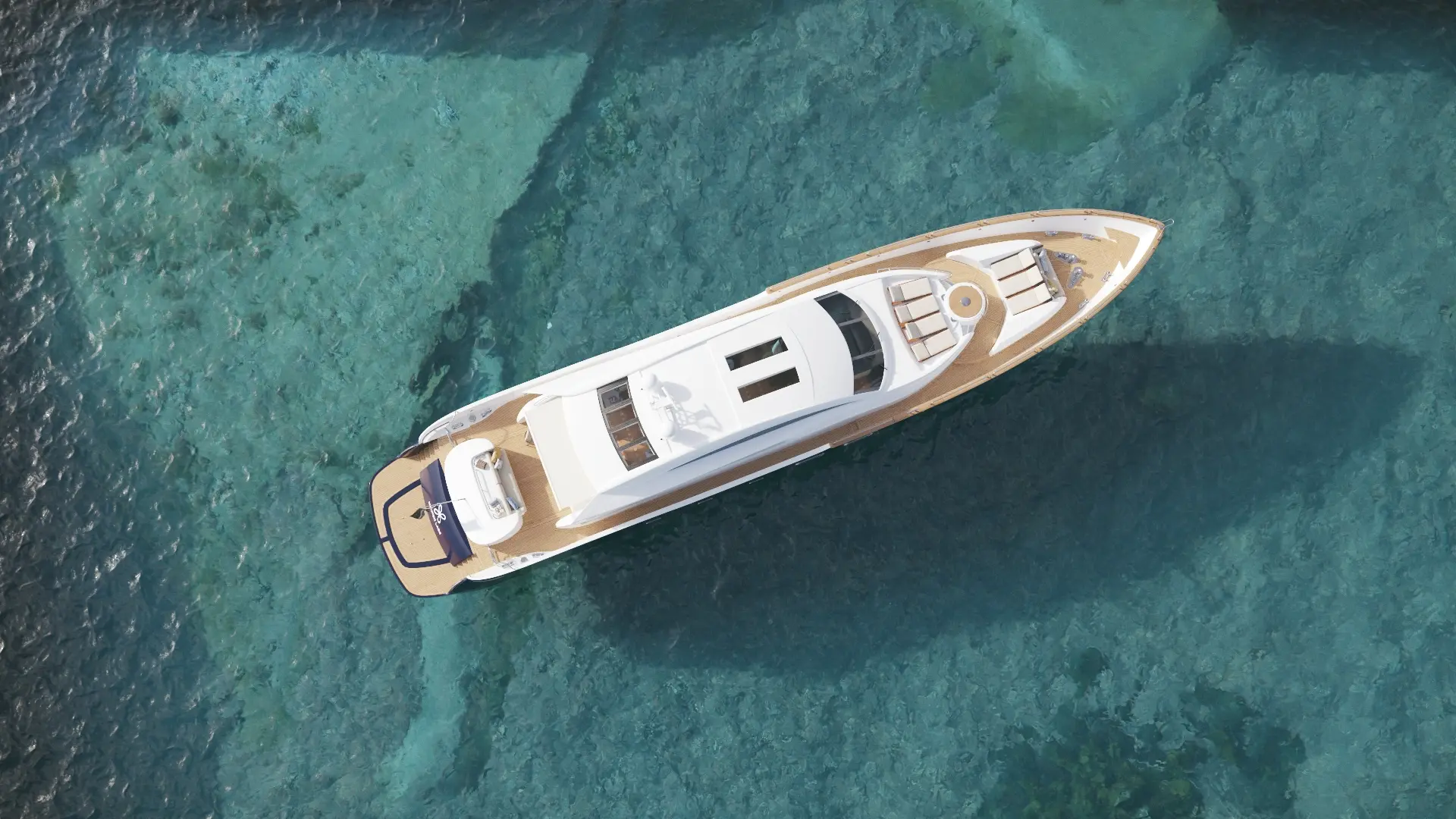
The introduction of 3D configurators has revolutionized the commercial landscape thanks to their interactivity and the possibility of real-time product customization.
This type of tool has become especially present in sectors such as automotive, naval, architecture or even fashion, among others.
And the use of this technology is enhancing the relationship with customers in a novel way that rewards immersion and the ability to visualize the product from any angle before purchasing it.
In this article, we will delve into this technology, its operation and its use in multiple industries.
What Is a 3D Configurator?
A 3D configurator is a software-based application that allows users to customize products in a three-dimensional environment. Unlike traditional 2D configurators, 3D configurators offer real-time visualization of the product while changes are made to its design.
Users can choose from a multitude of product variables such as colors, materials, textures and sizes, among other characteristics, observing, at all times, how these changes are applied dynamically and visibly.
In some cases, 3D configurators can also integrate elements of augmented reality (AR) or virtual reality (VR), which further enriches the experience.
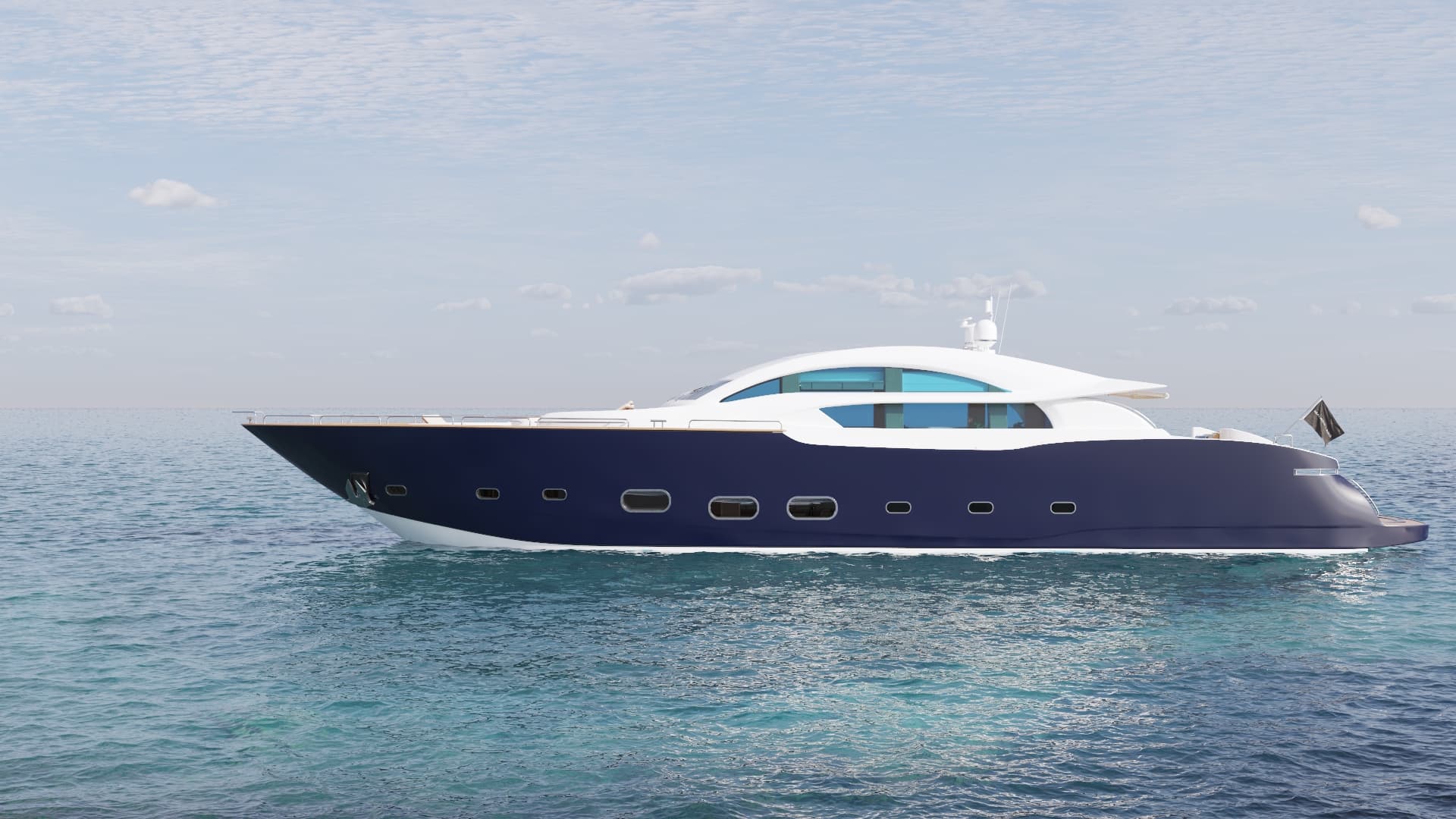
3D configurators work by integrating three-dimensional models that can be modified through a graphical interface.
This allows users to visualize products from different angles and with different configurations, helping them make decisions based on a much more detailed visualization of the desired product.
In addition, configurators are usually connected to databases that allow automatic calculations of costs, production times and component availability, so the shopping experience is further streamlined.
Applications of 3D Configurators
Fashion and Footwear
In the fashion sector, 3D configurators are changing the way consumers buy clothing and footwear.
Nike, for example, has launched a platform where customers can design their own sneakers thanks to the use of a 3D configurator that allows them to choose different models, colors or textures.
Similarly, the same functionality can be applied to clothing brands, where these configurators can also be applied to customize garments to your liking before purchase.
In addition, it not only improves the shopping experience, but also gives the product a certain exclusivity.
Architecture and Interior Design
In the architecture and interior design industry, 3D configurators allow customers to visualize their spaces interactively.
Three-dimensional models of rooms, houses or buildings can be generated and allow customers to customize aspects such as furniture, wall colors, element layout and lighting to their liking.
As mentioned above, this allows customers to make more informed decisions about the decoration and design of their homes, as they can check how different elements integrate into the space before making a purchase.
This also optimizes the work of designers, who can obtain instant feedback on the preferences of the client in question and adjust designs accordingly.
Furniture
Similarly, the furniture sector has also experienced a transformation thanks to 3D configurators.
Through the use of this tool, customers can modify the characteristics of furniture to fit their needs.
Aspects such as material, color, size and layout are some of the variables that play a significant role in this regard.
In relation to interior design, 3D configurators applied to furniture are of vital importance in helping designers play with the aesthetic effect of furniture and its application in the global composition of the designed space.
Automotive / Naval Industry
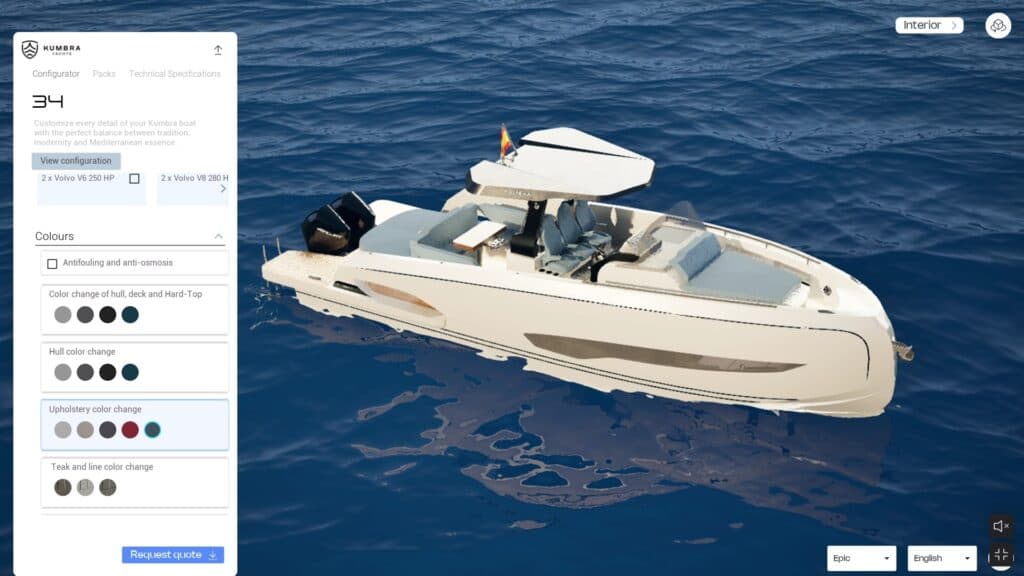
Finally, one of the sectors where 3D configurators have had a transcendental and innovative impact has been the automotive industry and, in relation to our focus of work, the naval industry.
Now, automobile and vessel manufacturers are beginning to implement advanced 3D configurators that allow customers to customize vehicles in detail.
Thus, users choose from a multitude of customization options available in each car or boat, from body or hull colors, to more technical aspects such as engine or propulsion.
This type of configurator is also a good tool for collecting data about customers' general preferences.
This information can subsequently be used to optimize the production and offer of their models based on the feedback received.
Benefits of 3D Configurators
3D configurators offer numerous benefits for both companies and consumers:
Enriched shopping experience
3D configurators provide an interactive experience that makes purchasing a product more attractive and personalized. Consumers can experiment with different configurations and see their choices in real time, which increases their satisfaction and confidence in the purchase.
Reduction of returns
By allowing customers to visualize and customize products before purchasing them, 3D configurators help reduce returns due to dissatisfaction with the product's design, size or style.
Production optimization
Companies can use the data generated by configurators to improve production planning, adapting their processes to customer preferences and demands. This also allows for greater efficiency in inventory management.
Increased sales
3D configurators can boost sales by offering customers the opportunity to create customized products that fully meet their needs and desires. In addition, the fact that consumers interact with products in a more interactive way directly impacts the possibility of sale.
Multi-device
The development of 3D configurators offers the possibility of using this tool from a multitude of devices such as computers, smartphones or tablets, which facilitates its use and application.
The Future of 3D Configurators
The future of 3D configurators is linked to the evolution of new technologies such as artificial intelligence (AI), augmented reality (AR) and virtual reality (VR).
These advances are expected to enable even more immersive and personalized configurators, providing higher quality visual and sensory experiences.
Conclusion
In conclusion, 3D configurators are changing the way consumers interact with products and make purchasing decisions.
They are opening a new horizon in e-commerce, so it is likely that 3D configurators will continue to evolve, providing new opportunities for brands and improving the customer experience.