Virtual reality to sell boats: notes from two boat shows
We took our yacht configurator in virtual reality to Navalia and the Valencia Boat Show. What it solves, what it does not replace and what we learned at the stand.
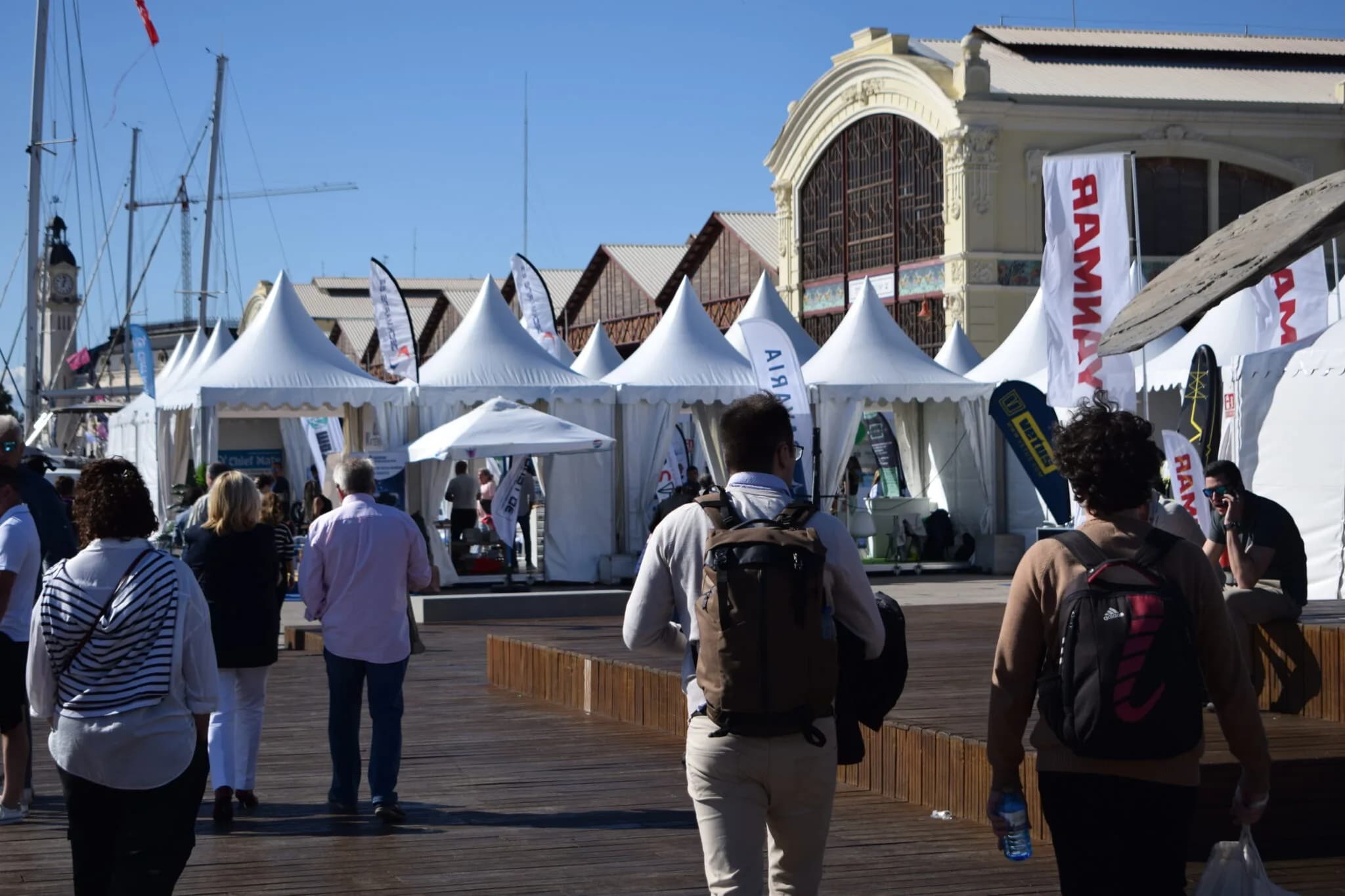
At Navalia 2024 the demo worked like this: the visitor put on the headset, appeared inside a boat and asked the assistant, out loud, to change a piece of furniture or a material. They saw it change right away. We were not showing them a drawing or a render: they were inside a yacht that had not been built yet. Since then we have taken our 3D yacht configurator in virtual reality to two boat shows. This is what it does, what it does not do and what we learned.
Navalia 2024
It was late May, in the space Navalia set aside for new companies in the sector. We brought a virtual reality walk through the interior of a vessel, with a voice assistant for changing furniture and materials. It was a first version, and we presented it as such. In 2026 we went back to Navalia with the configurator already in production.
Valencia Boat Show
In October 2024 we were at the Marina de Valencia for the fifteenth Valencia Boat Show: three days, more than 26,000 visitors, shipyards, engines, maintenance and services. We brought renders, the 3D configurator and the virtual reality tour. Using all three at the same stand showed us what each one is for: the render gets people to stop, the configurator is for showing the options, and the headset is for understanding the space.
What virtual reality solves
On a screen, the configurator shows the yacht from the outside at the size of a monitor. For many decisions that is enough. But the ones that weigh most when buying a boat (how much space there is, the headroom, the distance between decks, how a material looks up close) can only be made properly on board. And if the boat does not exist yet, there is nowhere to board.
With the headset there is. The customer goes inside the yacht, walks through it at real scale and changes hulls, finishes and equipment while seeing the result around them. It is the 3D yacht configurator in virtual reality we built from the Kumbra Yachts Studio, with the same models, the same options and the same compatibility rules. This matters: whatever someone configures at the stand can be built exactly as it is.
What it does not replace
We learned this at the show.
- The web configurator. The web is where the customer configures from home and where the salesperson shares a link. The headset is for the stand and the showroom. Since both come from the same files, maintaining one is maintaining both.
- The person at the stand. A headset session is for one person and lasts a few minutes. Someone has to guide it, explain what can be touched and listen to what the visitor asks. What people say while they are inside the yacht is the most useful information we take home from a show.
- Renders. A render can be sent, printed and published; a virtual reality session cannot. Since they come from the same models, there is no need to choose between them.
What you need to have it
The 3D models of the vessel (ideally the shipyard's own CAD) and the list of options with their rules. If you already have a web configurator, virtual reality is one more phase, not a new project. If you do not, we build both on the same models.
What we do for shipyards and yacht brands is on the shipbuilding and maritime page, and the configurator in detail on the 3D yacht configurators page.